2010 m. lapkričio 9 d., antradienis

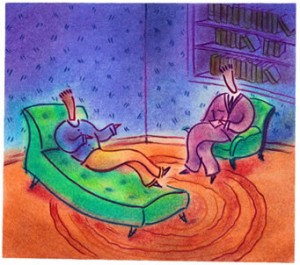
Disorders vs Behavior


Generally speaking main object of psychology is behavior and in clinical psychology it is a disorder.

Psychologists study how human behave in very different perspective. Neuroscience psychologists determine behavior to inborn predisposition and physiology, in cognitive psychology the biggest concern is how human sense the world and percepts it, how information is learned and affects behavior. Psychologist also developed a wide range of different models of motivation and developing theories that helps to describe and explain why humans behave how they behave. Mostly psychologists speak about healthy and normal individuals.

One of the biggest problems they encounter is how to define a disorder. Disorder might be considered as behavior without order or abnormal behavior therefore a disorder should be considered as in continuum with behavior rather than different states.

There are some criterions that help to evaluate when behavior seems to lose its order. By the help of statistics behavior might be asserted as disorder if it deviates from the average. Statistical method is quantitative considering that it is not always helpful determining disorders because some deviations from the average might be desirable like high IQ that helps to successfully operate in new environment, solve problems and some deviations might be just an alternative lifestyle that does not cause any threat to the individual’s health or other people.

Psychologist usually labels behavior as a disorder when it is disturbing one’s ability to adapt to the environment and function properly.

The best thing about being schizophrenic is that I am never alone.

References
Feldman R. S. Understanding Psychology Ninth Edition. New York: MacGraw-Hill 2009.

Pictures taken from
http://www.tricitypsychology.com/blog/wp-content/uploads/2008/06/patient-therapist-300x265.jpg
http://www.abbotsfordtoday.ca/wp-content/uploads/2010/08/depression.jpg

2010 m. rugsėjo 28 d., antradienis

Psychology of handwriting


Graphology is a science of handwriting in respect to human psychological features (Interlexis, 2001). Some people consider it to be pseudoscience and some use it in practice. This article defines a concept of graphology, states a brief historical background, and expresses some criticism to graphology.

Graphology is sometimes confused with forensic document examination that is an examination of documents with respect to handwriting analysis to determine if a document is written by a person who is thought to have written it, and that is not an aspect of graphology (Wikipedia).

The first books on graphology are claimed to be written in the end of XVI century. Currently, there are only two universities in the world: one in Italy, the other one in Argentina that offers accredited degree in handwriting analysis.

Graphology has developed three approaches to the study of handwriting: integrative, holistic and symbolic. Integrative graphology emphasizes on specific stroke structures that relate to personality traits. Holistic graphology is based on a holistic view, that is similar to Gestalt psychology, and focuses on the whole text, e.g. spaces between words, movement of a text, and according to this approach specific details like strokes or legibility are not important at all. Symbolic analysis which analyses pictures that might be drawn from strokes (Wikipedia).

Graphologists might consider handwriting as a manifestation of unconscious mental functions (Carroll R. T.), that is some sort of projection method but scientists believe projection methods to be not dependable or valid.

From another perspective graphology is based on assumptions that central nervous system is responsible for the muscles people use while writing as well as for the nervous system which is responsible for personal traits and health, therefore, it is possible to find some correlations between handwriting and personality or medical diagnosis (Wikipedia).

For example, a graphologist would say that nervous system of a depressed person works quite different that of an obsessed person, therefore, those persons’ hand movements while they write are different as well. In contrast, psychologist Dr. Rowan Bayne (quoted from Jonathan D. and Giles W., 2005) after studying graphology states that “It's very seductive because at a very crude level someone who is neat and well behaved tends to have neat handwriting". Single cases should not be generalized and called a law.

Some very old researchers claim it is possible even for untrained judges to determine sex from people‘s handwriting at about 60 to 80 % of chance (Newhall S. M., 1926; Young P. T, 1931), that is probably truth but there is no practical application of such people’s abilities.

Nowadays psychologists still argue whether or not handwriting has any relations to someone’s health or psychological features. Some research indicates that there is no correlation between handwriting and psychological features and other scientists even use handwriting analysis for an employment profiling. Even though someone found some reasonable facts about handwriting we would not be able to generalize it to different countries because each country has its own unique grammar, spelling, syntax and even different letters in the alphabet.


References
Kinderys A. Interlexis. Vilnius: Alma Littera, 2001.
Wikipedia http://en.wikipedia.org/wiki/Graphology [looked 2010-09-23]
Wikipedia http://en.wikipedia.org/wiki/Questioned_document_examination [looked 2010-09-23]
Caroll R. T. Sceptic’s Dictionary, 1994-2009 [looked 2010-09-23]
Jonathan D. and Giles W. Writing wrongs // BBC News Magazine, 2005 http://news.bbc.co.uk/2/hi/uk_news/magazine/4223445.stm [looked 2010-09-03]
Newhall S. M. Sex differences in handwriting // Journal of Applied Psychology, 1926, vol 10(2), p. 151-161.
Young P. T. Sex differences in handwriting // Journal of Applied Psychology, 1931, vol 15(5), p. 486-498.

2010 m. balandžio 27 d., antradienis

Psychology of conflict


We are facing unpleasant conflicts in our everyday life that is why psychologists are studying this matter. They are trying to understand its roots, development and consequences, searching for ways how to avoid and come up with more productive solutions in conflict situations.

Psychologist usually define conflict as a situations where are more than one motives that cannot be fulfilled or situation where we must choose something unwished or refuse something desirable.

Conflicts have two big categories called inner and external conflicts. Inner conflicts are without interactions with other people and external conflicts involve more than one person.

Talking about inner conflicts there are three types.
Conflict between more than one desires where all desires cannot be fulfilled. For example someone is thinking about adopting a pet and wants to have both a dog and a cat but that is not possible knowing that a dog and a cat will not get along peacefully.
Another type of inner conflict that is most complicated is called avoidance and avoidance conflict. It is a situation where one must choose something from more than one alternative where none is desirable. For example studying is boring but still student do not want to get a bad grade, in this case student will have to choose one of unpleasant alternative either force himself to read books or get a bad grade.
And most common inner conflict is desire against avoidance. In this case a desire would bring something unpleasant. For example we all love junk food but still we all are trying to avoid obesity and health problems.

Another category of conflicts is external conflicts which include interpersonal, group, military, resources, workplace conflicts etc. During external conflicts there is interference between different people’s motive. According to Thomas Kenneth there are five possible solutions to external conflicts.
Avoidance: is then one side begins to ignore and avoid conflict situation, in this case no one is wining and all participants of conflict are losing.
Accommodation: is then one side will give up and fulfill other side interests.
Competition: is then both sides of conflict are competing and in this case only one side can win.
Compromise: is then both sides give up a part of what it wanted, in this case no one is wining but still no one is losing everything.
Collaboration: is then both sides agrees to work together in order to find most agreeable solution.

Most easy way is to avoid conflict on the other hand it does not make conflict go away sooner or later it will reappear maybe just in a different form. Best way is try to deal with conflict immediate and collaborate with other side because that would create more positive environment for everyone.

References
R. Jusienė, A. Laurinavičius. Psichologija. Mykolo Romerio universitetas, 2007.
http://www.colorado.edu/studentaffairs/fsap/conflict.html
http://www.three-peaks.net/annette/Solving.htm

Psychology of Laughter


What did one math book tell the other math book? Man, I have a lot of problems.

Laughter was always an interesting phenomenon. The nature of laughter is still a mystery for scientist. Why do we laugh? Is laughter necessary to survive? How do we learn to laugh or it is inborn feature?

We usually define laughter as a pleasant emotion by which people express their joy and happiness. It is usually involuntary movements of face muscles especially around lips and under eyes along with sound caused by exhaling air.

First theorists which tried to explain laughter was great philosophers of ancient Greek. They believed that laughter is an archetype common to all people and separating humans from animals. They suggested a superiority theory that states people are laughing from other people misfortune because then they feel superior to others.

More recent incongruity theory explains that people laugh at moment of realization of incongruity between some concepts in a specific situation. This theory is supported by Schopenhauer who explained that “The cause of laughter in every case is simply the sudden perception of incongruity between a concept and the real objects which have been thought through it in some relation, and laughter itself is just the expression of this incongruity” (Schopenhour, 1819) and Kant who believed that “Laughter is an affection arising from the sudden transformation of a strained expectation into nothing. This transformation, which is certainly not enjoyable by the understanding, yet indirectly gives it very active enjoyment for a moment” (Kant, 1892). As well Charles Darwin: “From the fact that a child can hardly tickle itself, or in a much less degree than when tickled by another person, it seems that the precise point to be touched must not be known; so with the mind, something unexpected a novel or incongruous idea which breaks through an habitual train of thought appears to he a strong element in the ludicrous” (Darwin, 1899).

On the other hand none of these theories provides full explanation of laughter. People are laughing even they do not percept any mismatch between two ideas, or they do not feel superior to other. Some people are more likely to laugh in a stressful situation than in a pleasant for example corridors of university are filled with lauder laugh before exams, some psychologist would explained that nervous laughter is a subconscious attempt to reduce stress and calm down.

Social psychologist explains laughter as a sign for social acceptance. People are more likely to laugh if they are in a company where they feel comfort; one research states that people laugh about 30 times more often in a presents of others than being alone. People are smiling without any reason then they saw a friend. Laughter is a powerful tool to form relationships between peoples. In contrast laughter is sometimes used to bully, humiliate or exclude others from a group. To add more people who born without ability to move mimic muscles cannot smile and laugh, therefore they do not have much friend because people feel uncomfortable then they do not get an emotional feedback.

Talking about nature of laughter new research suggests that laughter was evolved from apes. "We have various findings showing that human laughter is deeply rooted in human biology, because, for example, it's present in various cultures, in deaf and blind children," explained Dr Marina Davila-Ross. Davila-Ross in her research made over 800 records of laughter caused by tickle of apes and infants. After analyzing these records she concluded that apes and humans laughter share similar acoustical characteristics.

According to Robert R. Provine study called “Giggle Twins” two twins were separated from the birth, they there growing in different environment bus still they had some similar aspects of laughter sound patterns and a taste of humor. Laughter for sure has some genetic basis.

There are different types of laughter. Laughter is usually classified regarding to its acoustic sound or the reason of laughter. Sometimes we are laughing out loud with mouth wide opened. Sometimes we are keeping our lips closed but still producing a sound by exhaling air from a nose that is called pigeon laughter. There is also a silent laughter that is when mouth is opened but exhaled air is not making any sound. There are lots of different types of laughter like: sniggering, cackling, chuckle etc.

Laughter has a lot of benefits for our body. It reduces stress hormones, boost immune system and energy; diminish pain. Some clinical patients who are watching comedies use fewer painkillers.


Our body cannot see difference between fake and sincere laughter, therefore some people are doing laughter yoga or attending laugh club where a group of people are lying on the ground and faking laughter. After attending such things people sleep better, feel less stress and are happier.

“Your sense of humor is one of the most powerful tools you have to make certain that your daily mood and emotional state support good health.” Paul E. McGhee, Ph.D.

References
http://news.bbc.co.uk/2/hi/science/nature/8083230.stm
http://www.msnbc.msn.com/id/31802854/ns/health-behavior/
http://en.wikipedia.org/wiki/Theories_of_humor
http://en.wikipedia.org/wiki/Laughter
Molly Edmonds, 5 Different Types of Laughter
Arthur Schopenhour, The World as Will and Idea, 1819
Immanuel Kant, The Critique of Judgement, 1892
Charles Darwin, The Expression of the Emotions in Man and Animals, 1899
2010 m. vasario 6 d., šeštadienis

Psychology Study at Mykolas Romris University and Kingston University London

In this paper I am going to compare two different universities one is Mykolas Romeris University (MRU) in Lithuania and other is Kingston University London (KU). I will emphasis on psychology studies.

Psychology bachelor degree
In MRU full-time study takes 4 years, part-time study takes 6 years and there is also available distant learning environment "moodle".
In KU full-time study takes 3 years, part-time study takes 6 years.

Programs modules in MRU
General education subjects capacity not less than 19.5 ECTS credits that includes subjects like foreign language, philosophy, economic theory, politics, law, management.
Studied science course subjects capacity not less that 90 ECTS that includes subjects like human anatomy and physiology, personality theory, emotions and motivation, sensation and perception, psychological testing, health, clinical, intercultural psychology.
Special education program of study subjects not less than 60 ECTS that includes exams, two course project.
Optional subjects capacity not less that 10.5 ECTS there are a very wide choice of subjects.
Total to be collected from 240 to 270 ECTS.
This program is accredited by the Center for Quality Assessment http://www.skvc.lt

Programs modules in KU
There are similar program and includes subjects like: classical social theory, learning and behaviour, evolutionary, abnormal, applied, social, developmental psychology.
Total to be collected from 220 to 320 ECTS.
Full module listing http://www.kingston.ac.uk/psychologybsc/#modulelist
This program is accredited by the British Psychological Society http://www.bps.org.uk

Facilities
MRU provides students with a psychology lab, free psychological service with psychological counseling, group lessons, and consultation for career planning.
KU provides students with specialized labs for participant observation, psychoacoustics lab, a cognitive lab, and a physiological lab.
Both universities provide online database subscriptions, internet library, international exchange programs, sport facilities.

The annual cost of studying
MRU £1443
KU £3290

Post graduate opportunities
In MRU are available studies of master degree in legal psychology, business psychology and social Psychology.
In KU is available study of master degree in applied child psychology.

Needless to say that Kingston University is bigger and can provide better quality education; on the other hand, learning is more expensive and it is harder to study on their foreign language. I personally would not change MRU to KU because I am happy here, maybe later after I will improve my English skills.